A taste of Sustainable Djurgården
No one wants to waste food unnecessarily. But in order to reduce food waste, we first need to see where it occurs. On Djurgården, the restaurants have done just that – together. Now we are sharing experiences, recipes and ideas in a new book about giving food a better fate than the bin.
Royal Djurgården, a historic island and popular destination in central Stockholm, is home to more than 30 restaurants, whose kitchens prepare food every day for Stockholmers and visitors from around the world. There is a long tradition here of a love of food and skilled craftsmanship – and a shared commitment to making better use of ingredients. From 2024 to 2026, Kungliga Djurgårdens Intressenter and Djurgården’s restaurants have worked together on the EU-supported project Circular and Resource-Efficient. One part of this work has focused on food waste: measuring it, understanding where it occurs and finding ways to reduce it in restaurant kitchens.
What we measure, we can change
Measuring food waste may sound simple. But when something that was previously just a feeling – or a full waste bin – becomes data, it becomes possible to identify patterns and see where changes make a difference. Twenty-three restaurants were given the opportunity to measure and analyze their food waste with support from the organization Generation Waste. The restaurants that measured regularly reduced their food waste by an average of 36 percent. At the same time, the process provided new insights into where waste occurs and which measures are effective.
Reductions in food waste are measured in grams per plate. That may sound insignificant – but when many plates are added together, grams become kilos and tons. This is an important lesson: even small changes can have a significant impact when many people make them.
Not everyone has measured in the same way, but the entire network has had the opportunity to learn. Experiences have been shared between kitchens, and ideas have been able to spread from one operation to another. This is an important part of how we work on Djurgården: harnessing the power of many different actors learning together.
From measuring to the joy of food
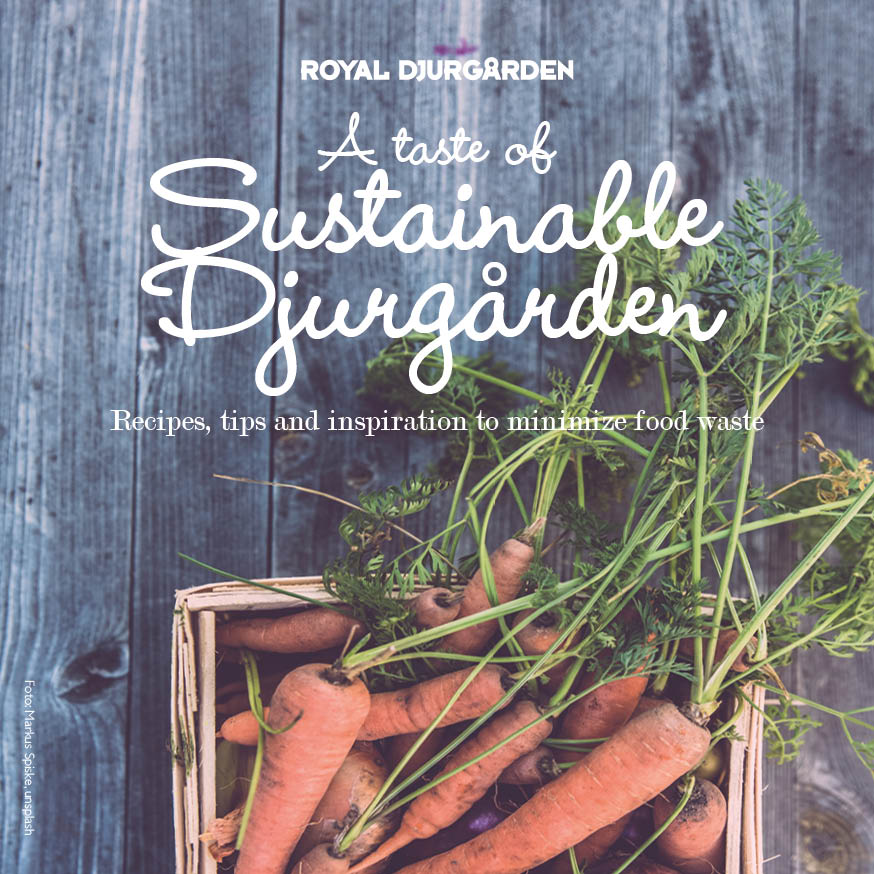
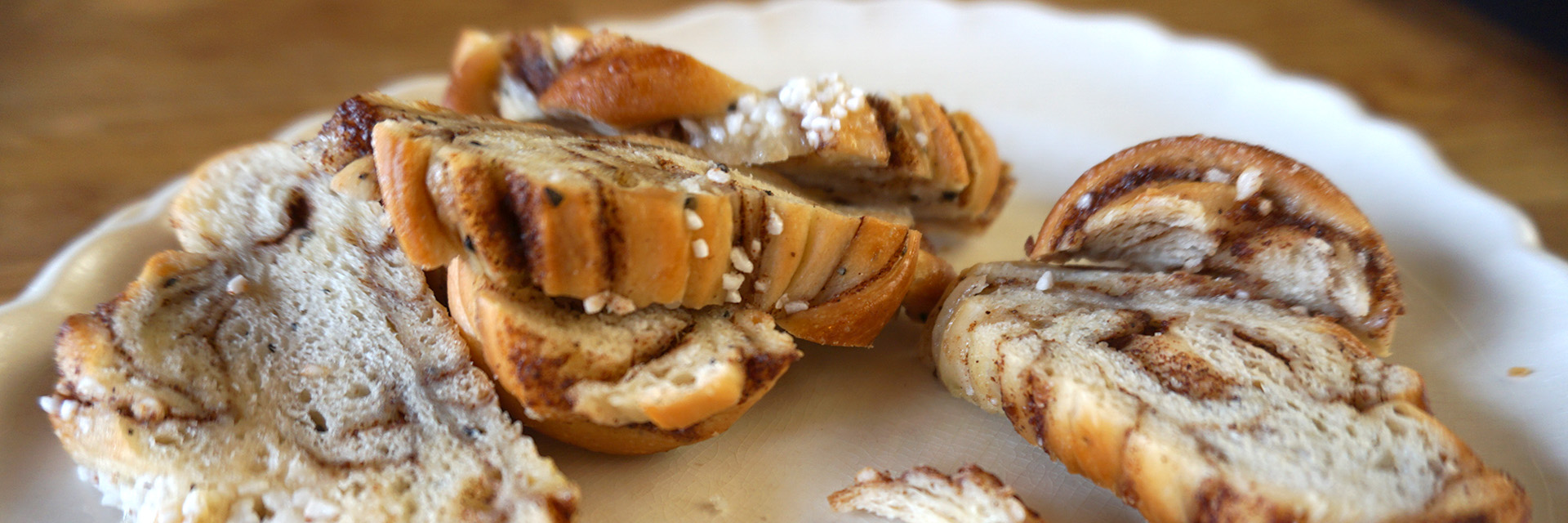
The results of this work are now collected in A Taste of Sustainable Djurgården – Recipes, tips and inspiration to minimize food waste. In the book, Djurgården’s restaurants share some of the ways they themselves make better use of food. It is about using the whole ingredient, transforming leftovers and seeing opportunities where we might previously have seen waste. Mashed potatoes become potato cakes. Herb stems and vegetable tops become pesto. Root vegetable peelings become pangrattato. Fish trimmings become Wallenbergare, and leftover buns become new cakes and desserts.
But the book is about more than recipes. It also contains practical tips and knowledge about food waste – from how to make use of leftovers in the fridge to why it matters not to pour coffee down the drain or throw away food that is still perfectly good to eat. In this way, the book is also a story about Djurgården’s restaurants: their craftsmanship, creativity and joy in food. And their commitment to taking responsibility for the resources that food represents.
When 0.4 grams becomes 2.2 tons
Food waste occurs wherever food is handled, but the largest share occurs in our homes. In Sweden, each person throws away around 16 kilos of edible food in the bin every year, while additional food and drink are poured down the drain.
This means there is a lot we can do – also in our everyday lives. Imagine if each of Djurgården’s more than 15 million annual visitors reduced their food waste by just the equivalent of a small pea a day – around 0.4 grams. Together, that would amount to around 2.2 tons less food waste in one year. The calculation is, of course, only an example. But it illustrates something important that we have seen in our own work: change does not always have to start with big steps. It can start by measuring, thinking twice and finding a new use for something that would otherwise have ended up in the bin.
From Djurgården and beyond
We believe that experiences become more valuable when they are shared. That is why we want the book to inspire people far beyond Djurgården’s restaurant kitchens – both at home and among other businesses. For us, this collaboration is an example of what can happen when many organizations with different circumstances come together around a shared issue. Competition does not disappear, but experiences and solutions can be shared. This makes it possible to learn from one another and take steps together towards a more circular food culture.
A taste of Sustainable Djurgården is therefore both a recipe book and the result of a shared effort. We hope it will spark curiosity, provide practical ideas and perhaps inspire someone to try something new the next time an ingredient, a leftover or a dish is at risk of becoming food waste. Because good food deserves a better fate than the bin.
International Day of Awareness of Food Loss and Waste – 29 September
On 29 September, the International Day of Awareness of Food Loss and Waste is observed around the world. On Djurgården, we use the day to put a special focus on our shared work. Our restaurants will serve dishes from the book and other food-waste-smart dishes, and the book will be given to visitors. It is also an opportunity to share more about how the restaurants work and how we, as guests, can contribute.
Welcome to Djurgården – twice as good!
Browse the book here:


PROJECT FACTS
Project title: PROMOTING CIRCULAR AND RESOURCE-EFFICIENT PRACTICES – through a shared approach and in how we engage with our guests
Project owner: Kungliga Djurgårdens Intressenter
Participants: Restaurants and attractions on Djurgården
Project period: 2024–2026
The project is 40% funded by the European Regional Development Fund.

Reducing food waste contributes to reducing the environmental impact of waste in cities (11.6).

Preventing and reducing food waste is a concrete part of the transition towards more sustainable consumption and production (2.3 and 12.5).

Reducing food waste reduces the unnecessary climate impact of food and increases knowledge of sustainable solutions (13.3).

By sharing knowledge and solutions, Djurgården’s restaurants demonstrate the power of collaboration for sustainable development (17.16 and 17.17).
